
Pest guide
Identify Your Pest
Not sure what you are dealing with? Upload a photo and our team will call you to identify it and recommend a treatment. Or browse the insects, rodents, birds and wildlife we treat across Calgary, Edmonton, Red Deer and surrounding Alberta communities below.
Photo received
Need help right now? Call (587) 840-8133Choose a category
What kind of pest are you seeing?
Pick the closest group, then compare photos, sizes and tell-tale signs to find your match. Every pest here is one we identify and handle in Calgary, Edmonton, Red Deer and surrounding communities.
Crawling insects
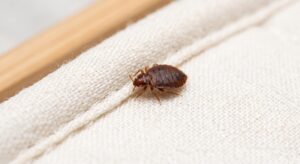
Bed bug
Bed bugs are blood-feeding insects about the size of an apple seed that hide in and around beds. Most people first notice them through itchy welts, small dark stains on sheets or a live bug tucked into a mattress seam.
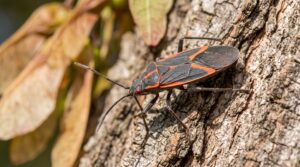
Boxelder bug
The boxelder bug is a black and red insect that feeds mainly on the seeds of Manitoba maple trees. It is noticed in late summer and fall, when large groups gather on sunny walls and slip indoors to spend the winter.
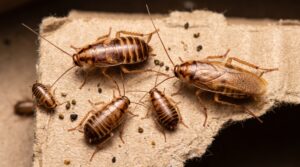
Brown-banded cockroach
The brown-banded cockroach is a small indoor cockroach named for the pale bands across its wings and body. It is rarely reported in Alberta, and it stands out because it hides in warm, dry rooms such as bedrooms and living rooms.
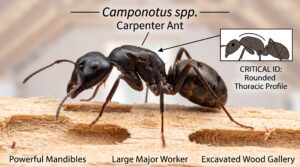
Carpenter ant
Carpenter ants are large black ants that chew out nests in damp or softened wood. Homeowners usually notice them when big ants wander indoors, winged ants gather near windows, or small piles of sawdust appear below trim.
Carpet beetle
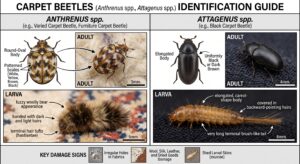
Carpet beetles are tiny, rounded beetles whose fuzzy larvae chew wool, fur, feathers, silk and other animal fibres. Most people notice the adults on windowsills in spring or find small holes and bristly shed skins in rugs, closets and stored clothing.
Cat flea
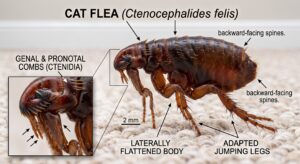
The cat flea is a tiny, jumping insect that feeds on the blood of cats, dogs and other animals, and will bite people too. It is the flea most often found on pets in North America, and most people notice it through a scratching pet or itchy bites on the ankles.
Cellar spider
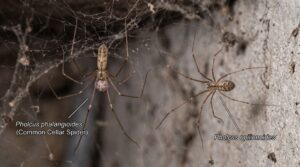
Cellar spiders are pale, delicate spiders with very long, thin legs that hang upside down in loose webs in basements, garages and ceiling corners. People notice them because of their long legs and untidy webs, but they are harmless to people.
Common house spider
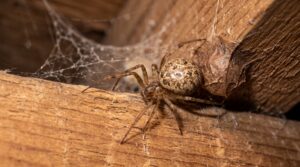
The common house spider is a small cobweb spider that builds messy, tangled webs in quiet corners of buildings. It is rarely confirmed in Alberta, where related cobweb spiders such as the boreal combfoot are recorded far more often.
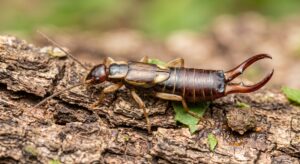
European earwig
The European earwig is a slender brown insect with a pair of pincers at the tail end. It hides in damp, dark spots by day and is noticed when it turns up under patio cushions, in flowers or inside the home in summer.
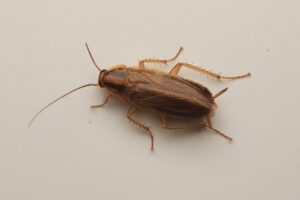
German cockroach
The German cockroach is a small, fast, light brown cockroach that breeds inside heated buildings. Alberta Health Services names it the most common cockroach in the province, and it is usually spotted at night near kitchen sinks, stoves and bathroom fixtures.
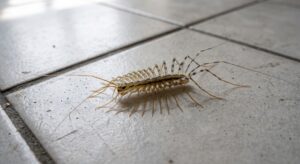
House centipede
The house centipede is a fast, long-legged hunter that, in cold climates, lives mostly inside heated buildings. It is rarely reported in Alberta, where the centipede most often recorded is the shorter-legged brown stone centipede.
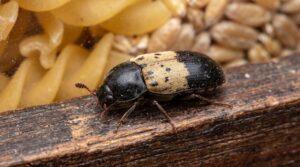
Larder beetle
The larder beetle is a dark, oval beetle with a pale band across its back that feeds on dried meat, pet food and dead insects or animals. In Alberta, most people notice the adults indoors in spring, often near windows, lights or the pantry.
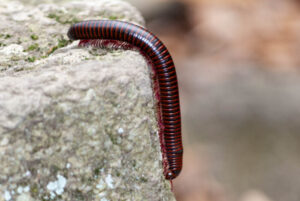
Millipede
Millipedes are slow, many-legged creatures that eat rotting leaves and other decaying plant material. They are noticed when a few wander into a damp basement or turn up in potted plants and soil brought indoors.
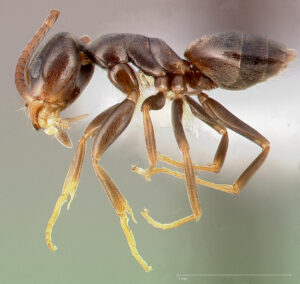
Odorous house ant
The odorous house ant is a small, dark native ant that gives off a smell like rotten coconut when crushed. It is often noticed as a busy trail along counters, sinks or baseboards, heading for sweet food.
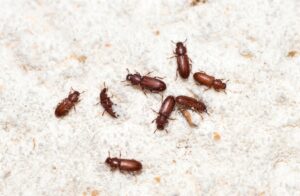
Pantry beetles (stored product beetles)
Pantry beetles are small beetles that live and breed in dry foods such as flour, cereal, rice, spices and pet food. People usually notice them crawling on shelves or in an opened package, and most arrive in the home inside food bought at a store.
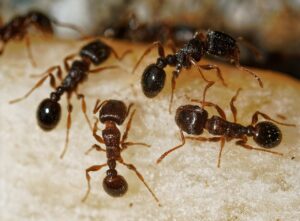
Pavement ant
Pavement ants are small, dark ants that live in the soil beneath concrete, such as walkways, parking pads and basement floors. They are rare in Alberta, so most small ants seen along local sidewalks turn out to be native species.
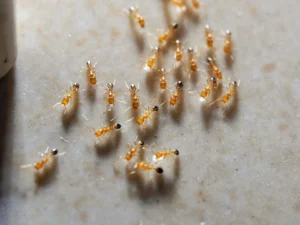
Pharaoh ant
Pharaoh ants are tiny, pale yellow ants from warm climates that can only survive in Alberta inside heated buildings. They are noticed in apartments, hospitals and food businesses, where large colonies spread quietly through walls and pipes.
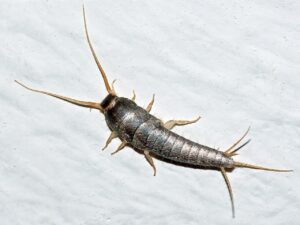
Silverfish
Silverfish are fast, wingless insects covered in shiny grey scales, with a body that narrows to three thin tails. People usually spot them at night in bathtubs, sinks and damp basements, and over time they can damage paper, books and starchy fabrics.
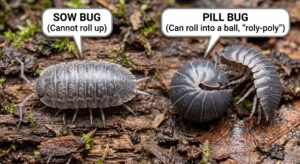
Sow bugs and pill bugs
Sow bugs and pill bugs are small, grey, armoured crustaceans that live in damp soil and leaf litter. People notice them when they wander into basements, window wells and entryways, which usually points to extra moisture nearby.
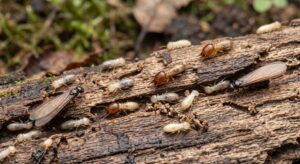
Termites
Termites are small, pale insects that live in colonies and feed on wood. Alberta has one native species, known from dry prairie near Medicine Hat, but building damage is rarely reported, so a suspected termite elsewhere is more likely a winged ant.
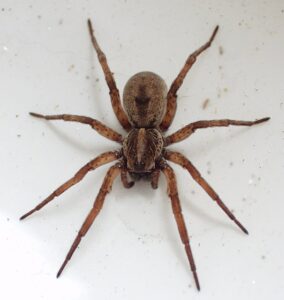
Wolf spider
Wolf spiders are bristly, fast-running spiders that stalk insects on foot rather than waiting in a web. They are common in Alberta yards, and the larger ones often startle people when they wander into basements and garages from spring to fall.
Flying insects

Bald-faced hornet
The bald-faced hornet is a large black and white wasp that builds a grey, football-shaped paper nest in trees, shrubs or under eaves. Nests grow fast through summer and are often noticed late in the season, when falling leaves bring them into view.
Blow fly (bottle fly)
Blow flies are shiny green, blue or bronze flies that buzz loudly and are often larger than house flies. A sudden group of them indoors often means a mouse, bird or other animal has died in a wall, attic or crawl space.
Bumblebee
Bumblebees are large, fuzzy native bees that pollinate gardens, crops and wildflowers across Alberta. People notice them when a nest turns up in a bird house, under a deck or shed, or in a compost pile close to where they work or play.
Cluster fly
Cluster flies are slow, dull grey flies that crowd onto sunny windows in fall and again in late winter and spring. They spend the winter hidden in attics and walls, but they do not breed indoors and are not known to spread disease.
Drain fly
Drain flies are tiny, fuzzy flies that look like miniature moths and rest on bathroom and basement walls. They breed in the slimy film inside drains, so seeing them usually points to a plumbing spot that needs cleaning.
Fruit fly
Fruit flies are tiny tan flies with red eyes that hover around ripe fruit, recycling and drains. They breed in anything moist and fermenting, so a small problem can grow fast in a warm kitchen.
Honeybee
Honeybees are lightly fuzzy bees, golden brown to almost black, kept by beekeepers across Alberta for honey and crop pollination. Homeowners usually notice them as a swarm, a large cluster of bees resting on a branch or wall in late spring or early summer.
House fly
The house fly is the grey, fast-flying fly most people find buzzing around kitchens, garbage cans and patio tables. It breeds in garbage, manure and rotting food, so many flies indoors usually point to a breeding spot nearby.
Indian meal moth
The Indian meal moth is the small pantry moth most often found flying in kitchens or crawling out of cereal, flour, nuts or pet food. Its larvae spin silk webbing through dry food, which is often the first sign people notice.
Paper wasp
Paper wasps are slender wasps with long, dangling legs that build small, open paper nests under eaves, railings and decks. In Alberta they live mostly in the far south, but the invasive European paper wasp now also turns up in Calgary and near Edmonton.
Webbing clothes moth
The webbing clothes moth is a small golden moth whose larvae chew holes in woollens, furs, silk and other animal-based materials. It hides in dark closets, storage bins and under furniture, so damage is often found before the moths are seen.
Yellowjacket
Yellowjackets are small, smooth black and yellow wasps that build covered paper nests in the ground, in walls or under eaves. People notice them most in late summer, when workers crowd garbage, patios and sweet drinks and defend their nests hard.
Rodents
Deer mouse
The deer mouse is a native Alberta mouse with a tan to reddish-brown back, white belly and white feet. People notice it in fall and winter, when it moves into garages, sheds, cabins and rural homes, and because it is the main hantavirus carrier in Alberta.
House mouse
The house mouse is a small grey-brown rodent that lives alongside people in homes, garages and businesses. Most people notice it by its droppings, chewed food packages or scratching sounds in walls and ceilings at night.
Meadow vole
The meadow vole is a small, stocky rodent that lives in grass and gardens across Alberta. Most people notice it in spring, when melting snow reveals winding runways, dead grass and chewed bark left from a winter of feeding under the snow.
Northern pocket gopher
The northern pocket gopher digs its own tunnel system and seldom comes to the surface. People rarely see the animal itself, but they notice the fresh mounds of loose soil it pushes up in lawns, gardens, acreages and pastures.
Norway rat
The Norway rat is a large, thick-bodied rodent found in cities across much of North America, but Alberta has kept it from becoming established since 1950. When Albertans report a rat, it is usually a large mouse, ground squirrel, pocket gopher or muskrat.
Richardson’s ground squirrel
Richardson's ground squirrel is the plump, tan rodent that sits upright beside its burrow in Alberta fields, parks and acreages. Most Albertans call it a gopher, and people notice it by its sharp whistle and the open burrow holes it digs in lawns and pastures.
Birds
European starling
The European starling is a stocky, shiny black bird that raises its young in cavities on buildings. People notice starlings when they nest in vents, eaves and soffits in spring, or when big flocks leave droppings on roofs and cars.
House sparrow
The house sparrow is a small, chirpy brown and grey bird that lives close to people in towns and cities across Alberta. It is noticed when it stuffs nests into vents, signs, eaves and light fixtures, or when droppings and noise build up near doors and patios.
Pigeon (rock pigeon)
The rock pigeon is the plump, blue-grey bird that gathers on ledges, rooftops and bridges in towns and cities. People usually notice pigeons because of the droppings, nests and noise they leave on balconies, signs and roof structures.
Wildlife
Big brown bat
The big brown bat is a sturdy, glossy brown bat found mostly in central and southern Alberta, including Edmonton, Red Deer and Calgary. It can spend the winter inside buildings, so it is the bat most likely to turn up in a home in winter.
Little brown bat
The little brown bat is a small, glossy brown bat and the species most often found roosting in Alberta buildings. It is noticed when a summer colony forms in an attic or wall, leaving droppings, a musty smell and bats streaming out at dusk.
Red squirrel
The red squirrel is a small, noisy tree squirrel with reddish fur and a white belly, common in Alberta's spruce and pine trees. It becomes a problem when it chews into attics, soffits and sheds to nest and store food.
Striped skunk
The striped skunk is a cat-sized, black and white animal known for the strong-smelling spray it uses in defence. In Alberta towns and cities, people usually notice skunks when one dens under a deck, porch or shed, digs up the lawn or sprays a pet.
Most common calls
Start with the usual suspects
Found your pest? We will take it from here.
Request a quote online or call (587) 840-8133. A licensed technician can confirm what you are seeing and recommend the right treatment for your home or business.