Identify Your Pest Crawling insects German cockroach
German cockroach
Blattella germanica · Also called: Croton bug
The German cockroach is a small, fast, light brown cockroach that breeds inside heated buildings. Alberta Health Services names it the most common cockroach in the province, and it is usually spotted at night near kitchen sinks, stoves and bathroom fixtures.
Size 13 to 16 mm long as an adult
Colour Light brown to tan, with two dark stripes behind the head
Key feature Two dark, parallel stripes on the shield just behind the head
Season Year round indoors; it cannot survive an Alberta winter outside
Where Kitchens and bathrooms, near sinks, stoves, fridges and dishwashers
What it looks like
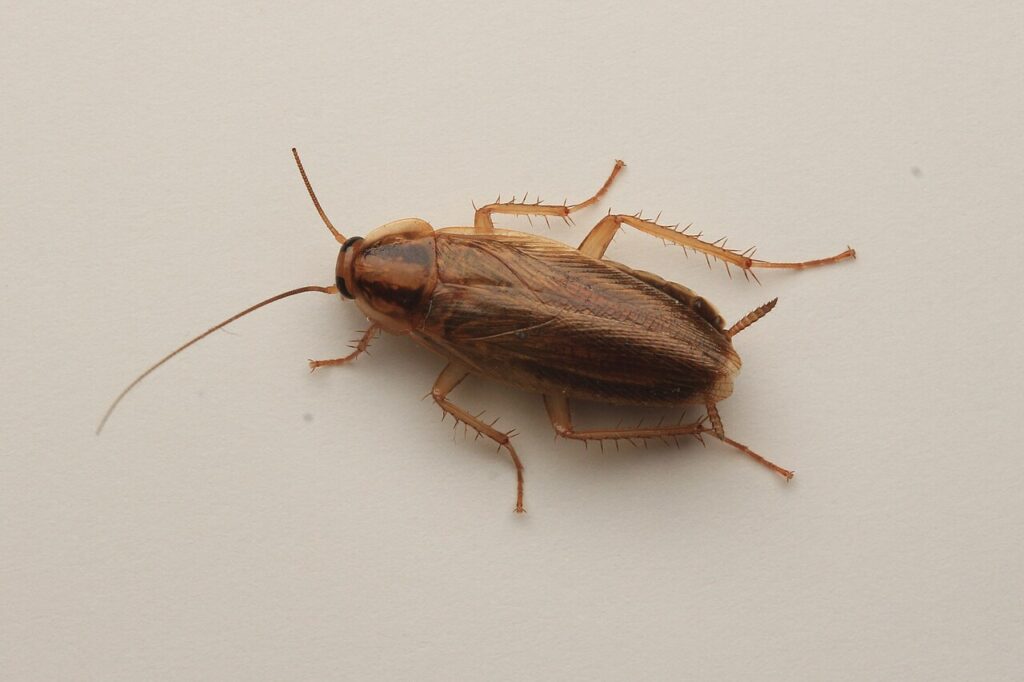
Adult German cockroaches are 13 to 16 mm long, flat, oval and light brown to tan. Look at the shield just behind the head. Two dark stripes run side by side from front to back. Adults have wings that cover the body, but they rarely fly. They run fast and hide in tight cracks during the day.
Young cockroaches, called nymphs, have no wings. They are dark brown to nearly black with one pale stripe down the middle of the back. A female carries a small, tan, purse-shaped egg case at the tip of her body until the eggs are almost ready to hatch. Seeing one is a sign of a breeding infestation.
Often confused with
Brown-banded cockroach
Bed bug
Oriental or American cockroach
Signs to look for
Cockroaches at night
Pepper-like droppings
Egg cases and shed skins
Smears and a musty smell
Reports from neighbours
Risks and damage
For most households the main concerns are allergies and hygiene. Proteins in cockroach droppings, saliva and cast skins are a common indoor trigger for allergy and asthma symptoms. Because the insects move between drains, garbage and kitchen surfaces, they can leave bacteria such as Salmonella on food and dishes. Heavy infestations also cause stains and a stale smell. They do not damage the structure of a home.
In Alberta
Alberta Health Services lists the German cockroach as the most common cockroach in the province. It turns up in homes, apartment buildings and food businesses in Edmonton, Calgary and beyond. It cannot live outdoors in an Alberta winter, so it spreads in boxes, used appliances, furniture and bags.
German cockroaches turn up in heated buildings right across Canada, even in the far North. Outdoor cold does not decide where they live; indoor warmth, food and water do.
How to keep them out
Inspect what you bring home
Keep food sealed
Fix leaks and dry wet areas
Seal cracks and pipe gaps
Manage garbage and recycling
When it is time to bring in a professional
Call a professional if you see more than one German cockroach or find nymphs or egg cases. They breed fast and hide in cracks and appliances, so cleaning alone rarely ends an infestation. Apartments may need a building-wide plan. Technica’s licensed technicians can confirm the species and plan treatment with follow-up.
Frequently asked questions
Does one German cockroach mean I have an infestation?
Not always, but it is a warning sign. One cockroach may have come in on a box or bag. Because they hide during the day, the one you see may belong to a larger group. Check for droppings, egg cases and nymphs, and look in the kitchen and bathroom at night for a week or two.
Can German cockroaches live outside in Alberta?
No. They need warm, heated buildings and cannot survive an Alberta winter outdoors. That is why they spread from building to building in boxes, furniture, appliances and bags, rather than coming in from the yard.
I rent. Who is responsible for dealing with cockroaches?
Your landlord. Alberta’s Minimum Housing and Health Standards do not allow pest infestations in rental housing, and treating one is the owner’s job. Tenants must allow access for treatment. Report the problem in writing. If it is not fixed, an Alberta Health Services public health inspector can investigate.