
Identify Your Pest Crawling insects Silverfish
Silverfish
Lepisma saccharinum · Also called: Fishmoth, common silverfish
Silverfish are fast, wingless insects covered in shiny grey scales, with a body that narrows to three thin tails. People usually spot them at night in bathtubs, sinks and damp basements, and over time they can damage paper, books and starchy fabrics.
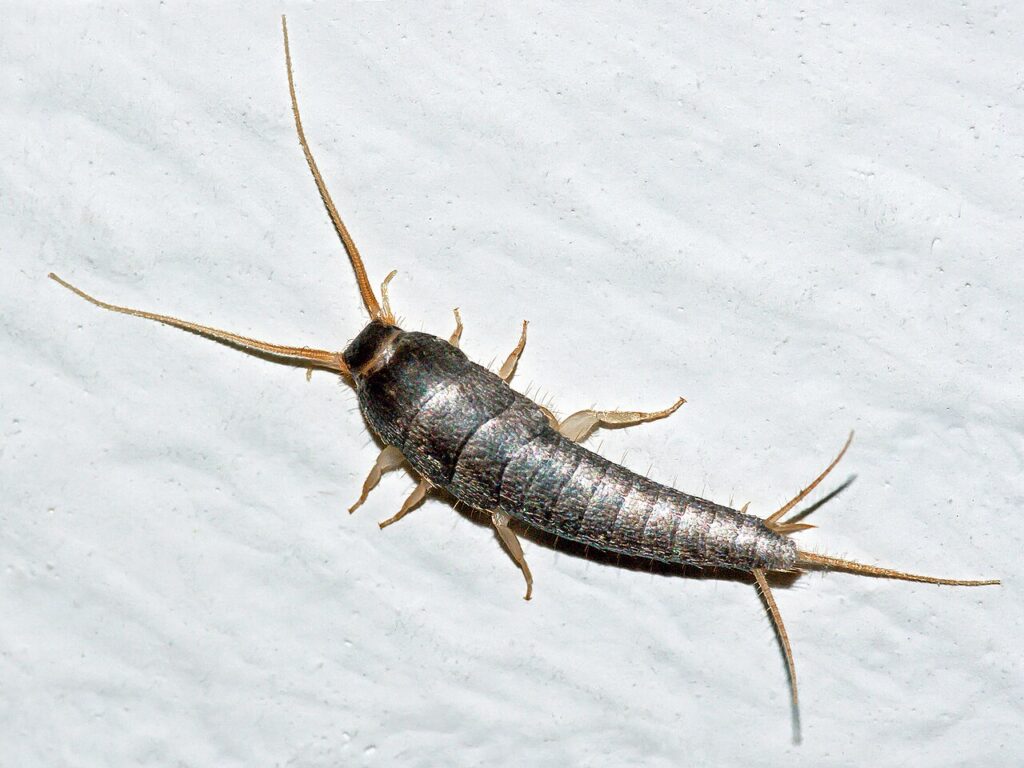
Size Adults just over 1 cm, plus long tails
Colour Silvery grey and shiny, from a coat of tiny scales
Key feature Tapered silvery body with three thin tails at the rear end
Season Year round indoors; most active at night
Where Bathrooms, laundry rooms, damp basements, closets and stored paper
What it looks like
A silverfish has no wings and a low, flat body that narrows from front to back, a bit like a tiny fish. Tiny scales make it look silvery grey and shiny. It has a pair of long feelers on its head and three thin tails. It darts quickly and wiggles as it runs.
Young silverfish look like small, paler adults. Silverfish hide in cracks during the day and come out at night. They are often found trapped in sinks and bathtubs, because they cannot climb the smooth sides. Pale shed skins and tiny scales near where they hide are another clue.
Often confused with
Firebrat
House centipede
Earwig
Signs to look for
Insects in sinks or tubs
Holes in paper
Yellow stains and droppings
Shed skins and scales
Risks and damage
Silverfish do not bite, sting or spread disease, and they are harmless to people and pets. They feed on starches and sugars, so over time they can chew holes in or stain paper, books, photos, wallpaper, cardboard and starched or cotton fabrics. They also get into flour and cereal. For most homes they are a nuisance, but a large, long-running infestation can damage stored papers and keepsakes.
In Alberta
Silverfish are found in homes throughout Alberta, including Edmonton and Calgary. Because the air here is fairly dry, they gather where humidity is higher, such as bathrooms, laundry rooms, basements and around leaky pipes. They often arrive in boxes, old books or furniture.
Unlike most insects, silverfish keep moulting after they become adults. Over a long life, a single silverfish can shed its skin dozens of times.
How to keep them out
Lower the humidity
Store paper in sealed bins
Cut down on cardboard
Seal cracks and gaps
Keep food sealed
When it is time to bring in a professional
A few silverfish in a bathroom usually point to damp air, not a serious problem. Call a professional if you see them often in several rooms, find damage to books, papers or clothing, or cannot find the moisture source. Technica’s licensed technicians can inspect for hidden moisture and treat problem areas.
Frequently asked questions
Are silverfish dangerous?
No. Silverfish do not bite or sting and are not known to spread disease. They are a nuisance pest that can damage paper, books and some fabrics over time. Seeing them is often a clue that part of the home is more humid than it should be.
Why do I find silverfish in my bathtub?
Silverfish are drawn to damp areas and are active at night. They can slip into a tub or sink while looking for moisture, but they cannot climb back up the smooth sides, so they are easy to spot in the morning.
How long do silverfish live?
Much longer than most household insects. Silverfish can live for two years or more, and some estimates run as high as eight years. Health Canada notes they can also go many months without food.