Technica Vole Solutions
Professional Vole Control for Lawns, Landscapes & Properties
Voles can cause serious damage to lawns, landscaping, gardens, shrubs, and exterior property areas. They are small rodents that create surface runways, burrow systems, and feeding damage around grass, trees, plants, and landscaped areas.
Unlike mice or rats that are usually noticed inside structures, voles are commonly found outdoors. Their activity can become especially noticeable after snow melts, when trails, tunnels, and damaged grass are exposed.
At Technica Pest Solutions, we provide professional vole control using a combination of professional rodent stations, trapping, and burrow treatment options, depending on the level of activity and the property conditions. Our technicians inspect the affected areas, identify signs of vole activity, and recommend the best treatment plan for the situation.
Our Vole Control Methods
Technica Pest Solutions offers professional vole control using different treatment methods based on the severity of the infestation, the location of activity, and the conditions on site.
Our vole control methods may include:
- Professional Rodent Stations
- Trapping
- Burrow Treatment / Gas Treatment Options
The right method depends on the property, the level of activity, safety considerations, and technician recommendations.
Professional Rodent Control Stations for Voles
One of the most common methods we use for vole control is professional rodent stations. These stations are installed strategically around areas where vole activity has been identified.
Rodent stations are designed to help control vole populations while keeping treatment materials secured inside a professional-grade station.
Common placement areas may include:
- Along active vole runways
- Around landscaped areas
- Near shrubs, trees, and garden beds
- Along fence lines
- Around sheds, decks, and exterior structures
- Near areas with repeated rodent activity
The technician will determine the best placement based on the inspection and the activity found on site.
Vole Trapping
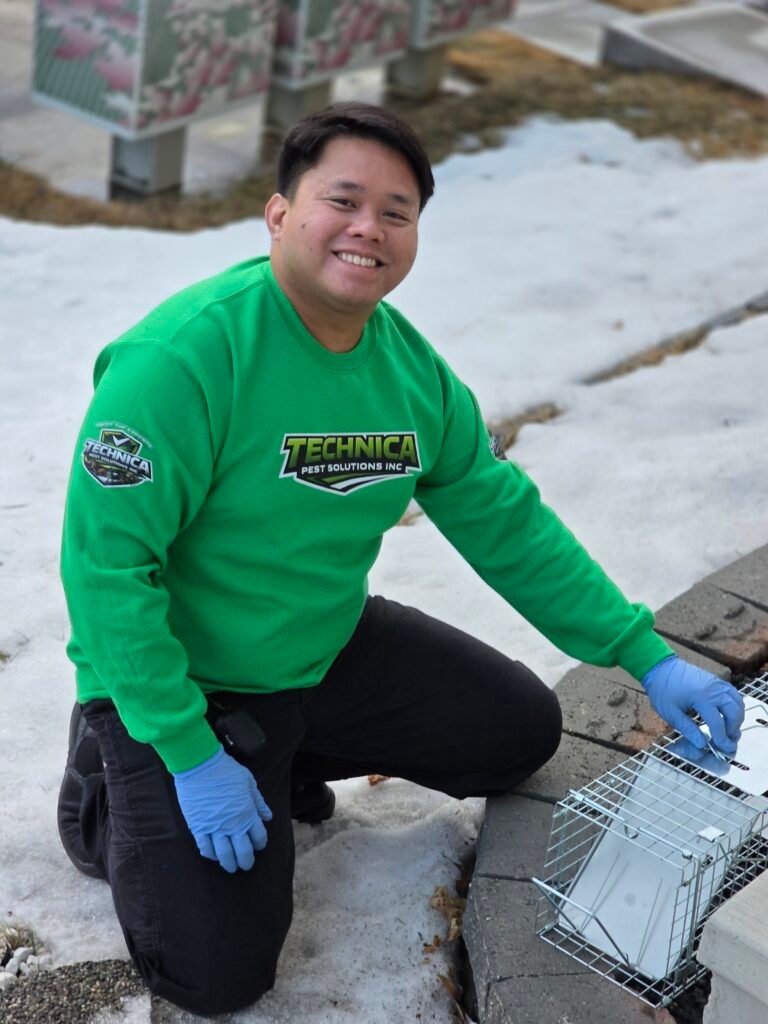
Trapping may also be used as part of a vole control program. This option can be useful in areas where direct activity is noticed and where trapping is practical based on the property layout.
Trapping may be recommended when:
- Activity is concentrated in a specific area
- Burrow systems or runways are clearly visible
- The customer prefers a non-bait-focused option
- There is concern about treatment placement in certain areas
- The technician determines trapping is suitable for the site
Trapping results can vary depending on activity levels, weather, access to burrows, and environmental conditions.
Burrow Treatment / Gas Treatment Options
For certain vole infestations, a burrow treatment or gas treatment option may be recommended. This method is used to target active burrow systems where voles are living or travelling.
This type of treatment is not suitable for every property and must be performed carefully by trained technicians. The technician will assess the site and determine whether this option is appropriate based on burrow locations, soil conditions, nearby structures, safety factors, and environmental considerations.
Burrow treatment may be recommended when:
- Active burrow systems are clearly identified
- Vole activity is concentrated in outdoor areas
- Other methods may not be enough on their own
- The property layout allows for safe and appropriate application
- The technician determines the treatment is suitable
Our team will explain the available options and provide recommendations based on the situation.
Our Vole Control Process
Inspection
Our technician will inspect the property to identify signs of vole activity, including surface runways, burrow openings, damaged grass, feeding damage, and active areas around landscaping or structures.
Treatment Recommendation
Based on the inspection, we will recommend the best treatment method. This may include professional rodent stations, trapping, burrow treatment, or a combination approach.
Professional Treatment
Our team will place stations, traps, or perform the appropriate treatment based on the service plan. Treatment areas will be selected based on vole activity and technician discretion.
Monitoring and Follow-Up
Depending on the service plan, follow-up visits may be recommended to monitor activity, refill stations, reset traps, or reassess the property.
Prevention Recommendations
The technician may recommend changes to help reduce future vole activity, such as trimming vegetation, reducing thick ground cover, removing debris, and limiting harbourage areas.