
Identify Your Pest Crawling insects European earwig
European earwig
Forficula auricularia (species complex) · Also called: Common earwig, pincher bug
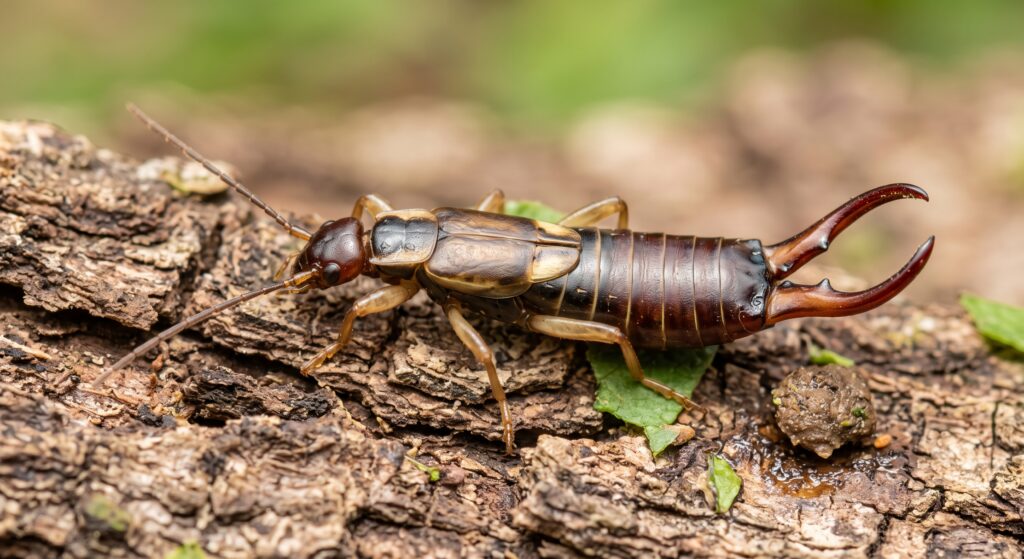
The European earwig is a slender brown insect with a pair of pincers at the tail end. It hides in damp, dark spots by day and is noticed when it turns up under patio cushions, in flowers or inside the home in summer.
Size About 12 to 20 mm long, including pincers
Colour Reddish brown body with paler tan legs and wing covers
Key feature Pair of pincers at the tail; curved in males, straighter in females
Season Late spring to fall; most noticed from late July to September
Where Under mulch, pots, patio cushions and siding; basements and door edges
What it looks like
European earwigs are slim and flattened, with a glossy, reddish brown body. The legs are pale tan. Short, leathery wing covers protect only the front part of the body, and the long antennae are made of many small segments.
The clearest feature is the pair of pincers at the end of the body. Males carry large, bowed pincers with a wide gap between them. Females have slimmer, straighter pincers that almost meet. Earwigs are active at night and scurry quickly when uncovered.
Often confused with
Rove beetle
Silverfish
Signs to look for
Ragged holes in plants
Groups hiding in tight spaces
Earwigs in flowers or produce
Night activity indoors
Risks and damage
Earwigs are mostly a nuisance. They can give a small pinch if handled, but it rarely breaks the skin. They have no venom and do not spread disease. The old story that they seek out human ears is a myth. In gardens, large numbers chew ragged holes in leaves, flowers and soft fruit. They also eat aphids and other small insects, so a few can be helpful.
In Alberta
European earwigs are established in many Alberta communities, including Calgary, Lethbridge, Red Deer and Edmonton. Adults spend the winter in the soil. Numbers build over the summer and are most noticeable from late July to September, when some wander into homes.
Female earwigs are caring mothers. A female guards her eggs in a small chamber in the soil, cleans them to keep mould away and stays with the young nymphs for a while after they hatch.
How to keep them out
Remove daytime hiding spots
Keep mulch thin
Water in the morning
Seal gaps at doors
Check items before bringing in
When it is time to bring in a professional
Most earwig problems ease with habitat changes. Professional help is worth it if earwigs keep getting inside in large numbers, if they are hiding in walls or siding, or if garden damage keeps growing. Technica’s licensed technicians can find where they are coming from and suggest next steps.
Frequently asked questions
Do earwigs really crawl into people's ears?
No. The name comes from an old folk tale. Earwigs look for tight, dark, damp hiding spots, but there is no evidence that they seek out human ears.
Can earwigs hurt me or my pets?
Not in any serious way. An earwig may pinch if picked up, which can feel sharp but rarely breaks the skin. They have no venom, do not sting and do not spread disease.
Why are earwigs coming into my house?
They are usually looking for cool, damp shelter, especially in hot or dry weather. Most come from mulch, pots or siding right next to the house. They lay their eggs in soil, so they rarely breed indoors.