
Identify Your Pest Crawling insects Pantry beetles (stored product beetles)
Pantry beetles (stored product beetles)
Also called: Flour beetles, grain beetles, drugstore beetles, weevils
Pantry beetles are small beetles that live and breed in dry foods such as flour, cereal, rice, spices and pet food. People usually notice them crawling on shelves or in an opened package, and most arrive in the home inside food bought at a store.
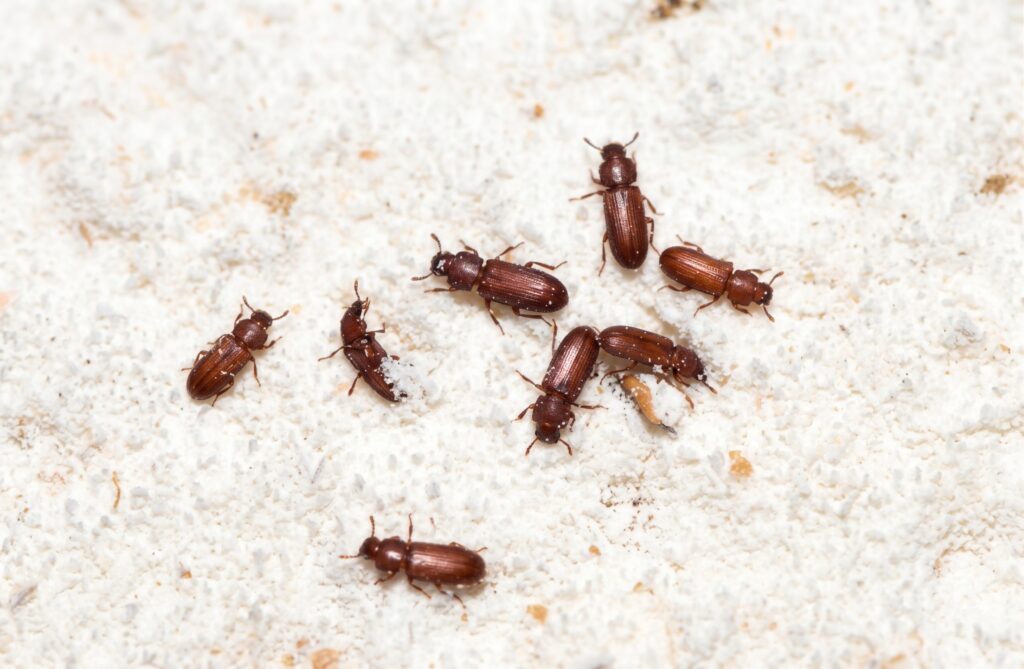
Size Most are 2 to 5 mm long
Colour Reddish-brown to dark brown
Key feature Tiny hard-shelled beetles crawling in or near dry food packages
Season Year round indoors; often noticed after buying new dry goods
Where Kitchen cupboards, pantries, pet food bins, birdseed and spice racks
What it looks like
Pantry beetles are a group of several species. Most are 2 to 5 mm long and reddish-brown to dark brown. The saw-toothed grain beetle is slim, with a row of tiny points along both edges of the plate behind its head. Flour beetles are flat, shiny and reddish-brown. Cigarette beetles are round and humped, and drugstore beetles are a little longer. Both hold the head tucked under. Weevils have a long snout.
The larvae are small, pale grubs, usually hidden inside the food. Look for live beetles on shelves, in lids and in package folds, and for tiny holes in paper or cardboard. Heavily infested flour may look grey, feel lumpy or smell stale.
Often confused with
Indian meal moth
Carpet beetle
Booklice
Signs to look for
Beetles on shelves
Holes in packaging
Grey or clumpy flour
Larvae in food
Beetles in lids and folds
Risks and damage
Pantry beetles do not bite, sting or damage buildings, and they are not known to spread disease. The problem is wasted food. Infested products are contaminated with beetles, larvae, shed skins and droppings and should be thrown out. Flour beetles can give flour an unpleasant smell and taste. They are mainly a nuisance, but an infestation can spread through a whole pantry if it is not caught.
In Alberta
Pantry beetles show up in homes and food businesses across Alberta, including Edmonton and Calgary. Most arrive inside packaged food, pet food or birdseed, not from outdoors. The rusty grain beetle is a major pest in Prairie grain bins, but kitchen problems usually start with food from a store.
The City of Edmonton lists the saw-toothed and merchant grain beetles among the most common kitchen pests in the city. The two look almost the same and are told apart by eye size.
How to keep them out
Inspect packages
Use airtight containers
Buy smaller amounts
Freeze new dry goods
Clean shelves often
When it is time to bring in a professional
Most small pantry problems end once infested food is thrown out and shelves are cleaned. Call a professional if beetles keep coming back, spread to several cupboards or rooms, or turn up in a restaurant, store or other food business. Technica’s licensed technicians can find the source and treat it.
Frequently asked questions
Is it safe to eat food that had pantry beetles in it?
Eating a few by accident is unlikely to make you sick, but infested food should not be kept. Throw out any package with live beetles, larvae or clumps, and check nearby items too. When in doubt, throw it out.
How did pantry beetles get into my kitchen?
Most arrive inside a product bought at a store, as eggs or tiny larvae that are hard to see. Some can chew through paper, thin cardboard and plastic wrap, so they spread between packages. If you find insects in a newly opened product, you can report it to the Canadian Food Inspection Agency.
Do I need to throw out everything in my pantry?
Not usually. Check every dry food item closely. Throw out anything with beetles, larvae or clumps, and move clean items into sealed containers. Vacuum and wipe the shelves before putting food back.