
Identify Your Pest Crawling insects Bed bug
Bed bug
Cimex lectularius · Also called: Common bed bug, bedbug
Bed bugs are blood-feeding insects about the size of an apple seed that hide in and around beds. Most people first notice them through itchy welts, small dark stains on sheets or a live bug tucked into a mattress seam.
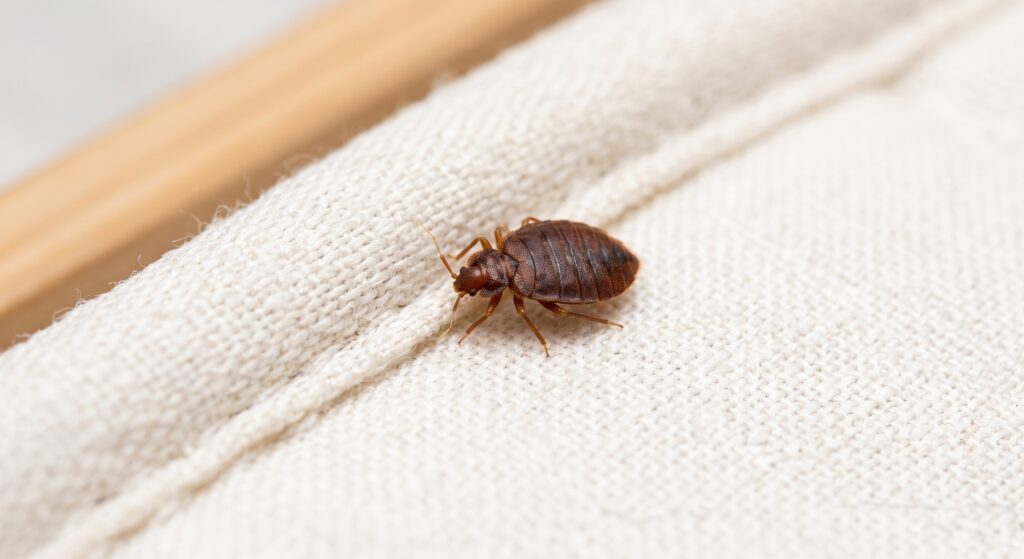
Size Adults 4 to 7 mm, about an apple seed
Colour Reddish-brown; darker and redder after feeding
Key feature Flat, oval, wingless body that swells and turns red after a blood meal
Season Year round indoors; often spread after travel or a move
Where Mattress seams, bed frames, headboards, couches and cracks near beds
What it looks like
Look for a flat, oval, rust-coloured insect with six legs and no wings, about the size of an apple seed. A bug that has just fed looks swollen, longer and a deeper red. Nymphs have the same shape but are smaller, and can look pale or almost clear until they take a blood meal.
Eggs are pearly white, about the size of a pinhead, and are glued into seams and cracks, so they are easy to miss. During the day bed bugs pack into tight spaces close to where people sleep. Check mattress seams, box spring corners, headboard joints and carpet edges near the bed. Dark spots, pale shed skins and eggs grouped together in one spot are a strong sign.
Often confused with
Bat bug
Carpet beetle
Young cockroach
Signs to look for
Dark spots on bedding
Shed skins and eggs
Bites in lines or clusters
Blood smears on sheets
A musty odour
Risks and damage
Bed bugs are not known to spread disease. Their bites can cause itchy red welts, often in lines or small groups, though some people show no reaction at all. Scratching can lead to a skin infection. For many people, the bigger toll is lost sleep, stress and worry. Bed bugs do not damage buildings, but they spread easily between rooms and suites, and replacing furniture and bedding can be costly.
In Alberta
Bed bugs are found across Alberta, in Edmonton and Calgary apartments, houses and hotels, and in smaller towns too. They do not live outdoors here. They move with people in luggage, bags, clothing and used furniture, and they can spread between suites in multi-unit buildings.
Health Canada says a bed bug can go up to about 18 months between blood meals. That is why a suite or cabin that has sat empty for months can still have bed bugs waiting when people return.
How to keep them out
Check luggage after travel
Inspect used furniture
Use mattress encasements
Dry laundry on high heat
Reduce clutter
When it is time to bring in a professional
Call a professional as soon as you find a live bug, eggs or clear droppings. Bed bugs hide deep in furniture and walls, where store-bought foggers do not reach. In apartments and condos, acting early also protects nearby suites. Technica’s licensed technicians can confirm the pest and recommend heat or other treatment.
Frequently asked questions
Do bed bugs spread disease?
Bed bugs are not known to spread disease to people. Their bites can itch, and some people react more than others. If bites become very swollen, blistered or infected, or worry about bed bugs is affecting your sleep, talk to a doctor or pharmacist.
Are bed bugs a sign of a dirty home?
No. Bed bugs feed on blood, not on crumbs or dirt, so they turn up in clean homes and well-kept hotels alike. Clutter does not attract them, but it gives them more places to hide and makes treatment harder.
Who deals with bed bugs in a rental in Alberta?
Alberta’s housing health standards require landlords to keep rental housing free of insect infestations. Tenants should report signs early and follow preparation steps so treatment works. If a problem is not addressed, a public health inspector can look into it.