
Identify Your Pest Crawling insects Wolf spider
Wolf spider
Lycosidae (family)
Wolf spiders are bristly, fast-running spiders that stalk insects on foot rather than waiting in a web. They are common in Alberta yards, and the larger ones often startle people when they wander into basements and garages from spring to fall.
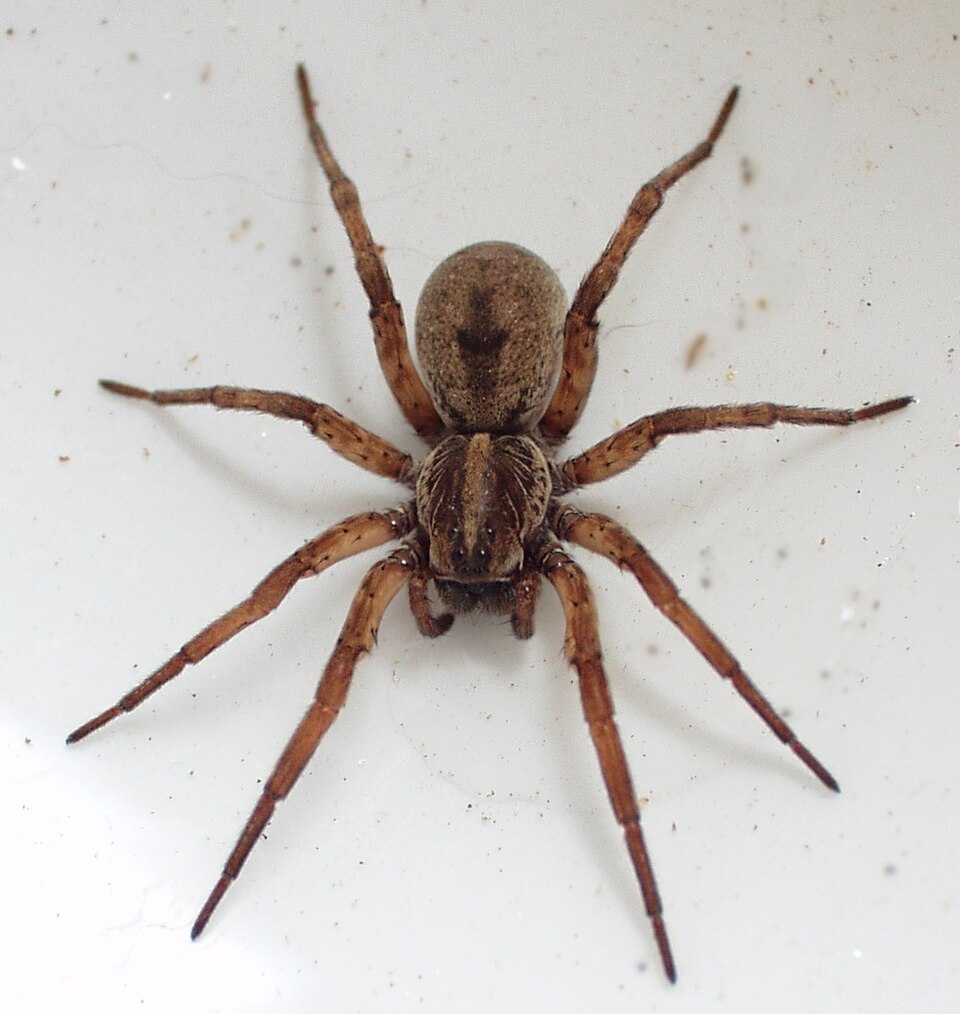
Size Body about 4 to 20 mm long, plus legs
Colour Mottled brown, grey or black, often with pale stripes
Key feature Two large forward eyes that shine in a flashlight; hunts on foot with no web
Season Active spring to fall; most often seen from April to June
Where Basements, garages, window wells and ground floors near lawns and gardens
What it looks like
Wolf spiders are thick-bodied, bristly spiders built for running. Most are mottled brown, grey or black, and many have pale stripes on the front body section. Check the head with a light. A big pair of dark eyes faces forward above a line of four tiny ones, and one more pair sits farther back on top. At night the big eyes send light back as a green or silver glint.
Females are easy to recognize. A mother carries a round, pale egg sac attached to the tip of her abdomen. After the eggs hatch, many tiny spiderlings ride on her back for a short time. Wolf spiders move in quick bursts and often freeze flat against the floor when approached.
Often confused with
Barn funnel weaver
Fishing spider
Signs to look for
Fast spiders on the floor
Eyeshine at night
Female with an egg sac
Spiders in window wells
A large spider with no web
Risks and damage
Wolf spiders are mostly a nuisance. They are not aggressive and do not damage homes, food or fabric. They may bite if handled or pressed against skin. A bite may sting sharply for a short time and leave a small red, puffy spot that normally clears by the next day. Wash the area and watch it. See a doctor if redness spreads or you feel unwell. Seeing many indoors can mean there are plenty of insects for them to eat.
In Alberta
Nature Alberta counts 47 wolf spider species in the province. You will find them on lawns, in flower beds and on forest floors in Edmonton, Calgary and beyond. They are most active from April to June. Some wander indoors from spring to fall, and a few seek shelter as nights cool.
A mirror-like layer behind some of a wolf spider’s eyes bounces light back through the eye, which helps it hunt in dim light. That same layer is why its eyes sparkle when a flashlight hits them.
How to keep them out
Seal gaps at ground level
Clear the foundation edge
Change outdoor lighting
Cover window wells
Reduce floor clutter
When it is time to bring in a professional
A few wolf spiders in fall are normal and can be caught in a cup and put outside. Consider a professional if you see them often, if they turn up in bedrooms, or if you are unsure what spider you have. Technica’s licensed technicians can confirm the species, find entry points and check for insects drawing them in.
Frequently asked questions
Are wolf spiders dangerous?
No. Wolf spiders are not considered medically serious. They bite only if trapped or handled. A bite may hurt like a bee sting and cause mild swelling that fades on its own. Get medical care if a bite looks infected, the redness spreads, or you have a strong reaction.
Why do wolf spiders end up inside?
Wolf spiders roam at night to hunt, and males roam even more while they search for mates. Some slip under doors or through gaps and end up in basements and garages. A few look for shelter as nights cool in fall. They are outdoor spiders and do not usually settle in homes.
Is that big hairy spider a tarantula?
No. Alberta has no wild tarantulas. A large, hairy, fast spider in an Alberta home or yard is usually a wolf spider or a wandering male barn funnel weaver. A wolf spider has two large, shiny forward-facing eyes. A funnel weaver has eight small eyes of similar size.