
Identify Your Pest Crawling insects Millipede
Millipede
Diplopoda · Also called: Thousand-legger
Millipedes are slow, many-legged creatures that eat rotting leaves and other decaying plant material. They are noticed when a few wander into a damp basement or turn up in potted plants and soil brought indoors.
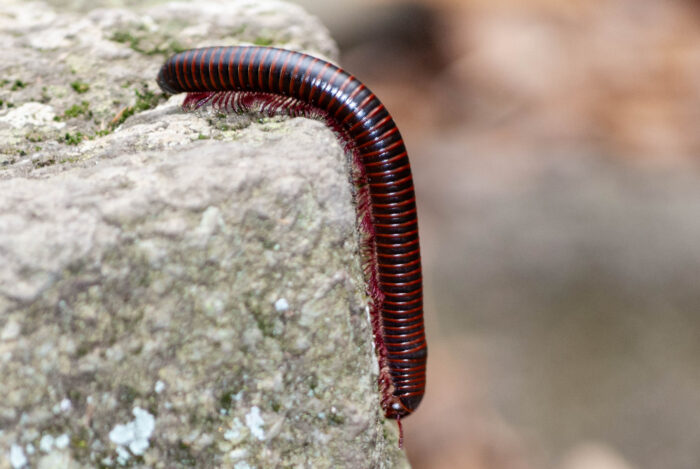
Size Most found indoors are 10 to 30 mm long
Colour Dark brown, black, grey, or pale with reddish side spots
Key feature Long, segmented body with two pairs of short legs on most segments
Season Mostly spring to fall; in potted plants any time of year
Where Damp basements, window wells, garages, flower beds and potted plants
What it looks like
Millipedes have a long body made of many rings, round or slightly flat on top. Seen from the side, the legs sit under the body, not out to the sides, with two pairs on most rings. The antennae are short. A millipede glides along slowly, and if you touch one, it often rolls up like a watch spring.
Colour varies by type. Some are dark brown or black and shiny. The greenhouse millipede is brown with pale legs and small ridges along its sides. The spotted snake millipede is pale with a row of reddish spots down each side.
Often confused with
Centipede
Wireworm
Signs to look for
Coiled dead millipedes
Millipedes in potted plants
Activity in window wells
More after heavy rain
Risks and damage
Millipedes are a nuisance, not a danger. They cannot bite or sting, carry no known disease and eat rotting plant matter, not your home or belongings. Some kinds release a smelly fluid when handled that can irritate or stain skin, so wash your hands after touching one and keep it away from your eyes. Indoors they usually dry out and die quickly. Outdoors they may nibble seedlings or soft fruit on damp soil.
In Alberta
Several kinds of millipedes live in Alberta, and some were brought in from other parts of the world. They turn up in damp basements, garages, greenhouses and potted plants. Most Alberta homes see only a few at a time rather than the large invasions reported in warmer regions.
The name millipede means thousand feet, but most have far fewer legs. The first species known to have more than 1,000 legs was only described in 2021, from deep underground in Western Australia.
How to keep them out
Create a dry strip
Improve drainage
Seal ground-level gaps
Check plants and soil
Keep basements dry
When it is time to bring in a professional
Most millipede sightings do not need professional help. It is worth calling if millipedes keep appearing indoors in numbers, if you find them in several rooms, or if you cannot find the damp area drawing them in. Technica’s licensed technicians can inspect the foundation and basement and recommend next steps.
Frequently asked questions
Are millipedes poisonous?
Millipedes do not bite or sting. Some kinds release a smelly defensive fluid that can irritate skin or eyes, so wash your hands after touching one. They are a nuisance rather than a real danger.
What is the difference between a millipede and a centipede?
Check the legs and the speed. A millipede’s legs are packed underneath, two pairs to a ring, and it crawls slowly while it feeds on rotting plants. A centipede’s legs spread out to the sides, one pair to a ring, and it runs down insects to eat.
Will millipedes take over my house?
Unlikely. Millipedes need damp soil and decaying plants to live and breed. Most that wander inside dry out and die quickly. Steady numbers indoors usually mean a moisture problem or a nearby source, such as potted plants.