
Identify Your Pest Crawling insects Cat flea
Cat flea
Ctenocephalides felis · Also called: Flea, pet flea
The cat flea is a tiny, jumping insect that feeds on the blood of cats, dogs and other animals, and will bite people too. It is the flea most often found on pets in North America, and most people notice it through a scratching pet or itchy bites on the ankles.
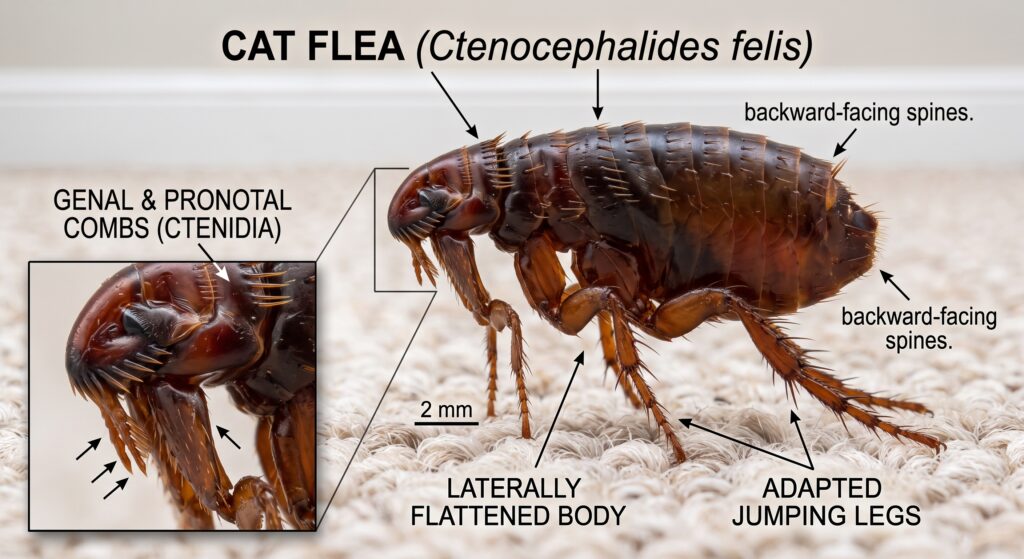
Size About 1 to 3 mm long
Colour Dark reddish-brown to almost black
Key feature Tiny wingless body flattened side to side; jumps far when disturbed
Season Year round indoors; outdoor peak late summer to early fall
Where Pet bedding, carpets, rugs, couches and floor cracks where pets rest
What it looks like
Adult cat fleas are tiny, about 1 to 3 mm long, and dark reddish-brown. They have no wings. The body is flattened from side to side, like a coin standing on its edge, which helps them slip through fur. Strong back legs let them jump many times their own length, so the first sign is often a dark speck that suddenly disappears.
Check pets near the base of the tail, the belly and the neck. Comb the fur over a white paper towel. Black specks that turn reddish when dampened are flea dirt, the droppings of digested blood. Flea larvae are tiny, pale and worm-like. They live deep in carpet and pet bedding, away from light, and are rarely seen.
Often confused with
Bed bug
Springtail
Dog flea
Signs to look for
Pets scratching or chewing
Flea dirt
Bites around the ankles
Jumping specks
Bites after moving in
Risks and damage
Flea bites are small, itchy red bumps, often on the ankles and lower legs. A pet with fleas may scratch until its skin is sore or patchy, and some pets become allergic to the bites. Pets can get tapeworm by swallowing a flea while grooming. Very young or small animals with many fleas can lose enough blood to become weak. Serious illness in people from household fleas is rare.
In Alberta
Alberta’s cold winters and dry air keep flea numbers lower than in humid regions, but fleas still turn up in Edmonton, Calgary and across the province. Pets often bring them home after travel or contact with wildlife. Indoors, fleas can keep breeding in carpets and pet bedding.
Health Canada notes that fleas can jump up to about 20 cm straight up and 41 cm forward. That is many times their own body length, which is how they move so easily between the floor and a passing pet.
How to keep them out
Vacuum often
Wash pet bedding hot
Check pets with a flea comb
Limit contact with other animals
Keep wildlife away
When it is time to bring in a professional
Call a professional if fleas keep coming back after pets are treated, if people in the home are being bitten, or if you find fleas in a home with no pets. Eggs and cocoons in carpets and floor cracks keep adding fleas for weeks. Technica’s licensed technicians can treat the home while your vet cares for your pets.
Frequently asked questions
Can cat fleas live on people?
Cat fleas bite people but do not live on us. They need a furry host such as a cat or dog to breed. When pets are away or gone, hungry fleas will bite people instead, which is why bites often show up after a pet leaves or when moving into a new home.
Why do fleas appear in a home that has been empty?
Flea pupae can wait inside their cocoons for weeks or months. Vibration, warmth and the carbon dioxide we breathe out signal the adult fleas inside to come out. That is why people are sometimes bitten soon after moving into a home where pets used to live.
Will treating my pet get rid of fleas in the house?
It helps, but much of a flea problem is in the home as eggs, larvae and cocoons, not on the pet. Pets, bedding, carpets and furniture all need attention at the same time. It can take several weeks for all the adults in cocoons to come out and be cleared.