Wasp and Hornet Removal in Alberta
Licensed technicians treat and remove wasp and hornet nests at homes, rentals and businesses across Alberta. We handle visible nests, hidden nests in walls and soffits, and preventative sprays.
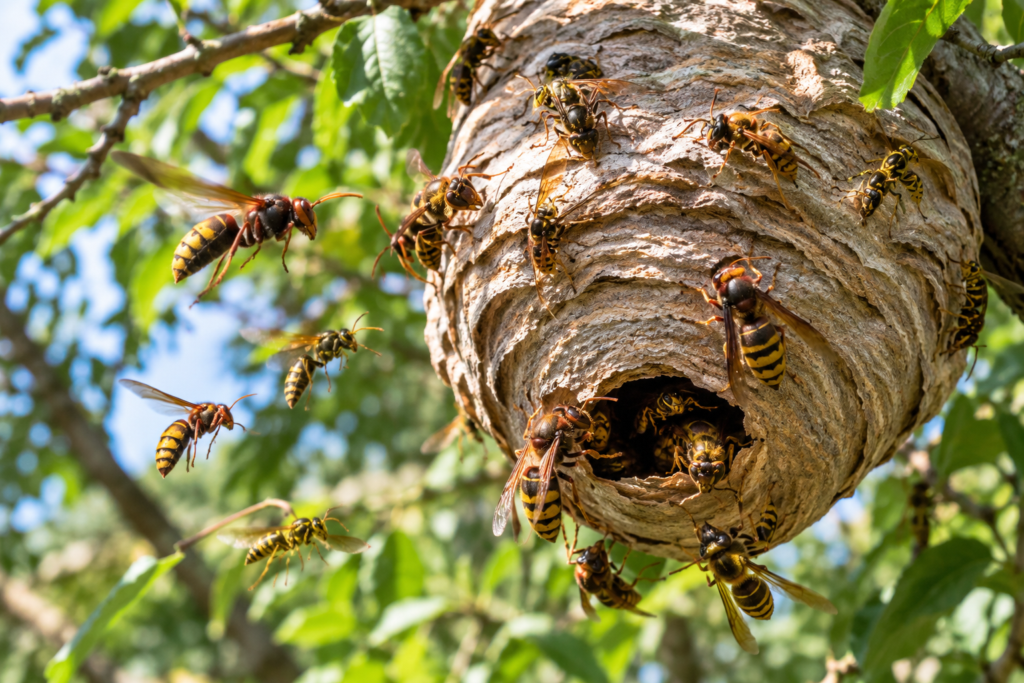
Signs of a Wasp or Hornet Nest
Nests can be out in the open or tucked inside the structure. Here is what to look for around your property.
A visible paper nest
Steady traffic at one gap
Wasps inside the building
Aggressive behaviour nearby
Activity at ground level
Nests near food and bins
How We Treat Wasp and Hornet Nests
The right approach depends on where the nest is and how easy it is to reach. After an inspection, your technician recommends one of these options.
Visible nest treatment and removal
When the nest is exposed and reachable, the technician treats it directly with professional-grade products. After activity dies down and the spot can be reached safely, the technician takes the nest down and carries it away.
Best for: Nests on eaves, soffits, decks, sheds, fences, trees and exterior walls
Hidden nest treatment
When wasps nest inside a wall void, soffit, roofline or burrow, taking the nest out would mean opening up the building. So the technician applies a dust or aerosol at the opening the wasps use. They carry it into the colony as they come and go.
Best for: Nests inside walls, soffits, attics, siding gaps, vents and underground burrows
Preventative barrier spray
The technician sprays the spots where wasps like to land and start building, which makes new nests less likely. It works well in spring, before colonies get going, or on properties that see wasps year after year.
Best for: Properties with recurring wasp activity every season
What to Expect From Start to Finish
Contact us
Get your estimate
Inspection on site
Treatment
Follow-up and prevention
Why a Wasp Nest Should Not Wait
Wasp colonies grow through the season, and wasps defend their nest when people or pets come near. A nest beside a door, patio or walkway can make part of your property hard to use. Hidden nests can push wasps into living spaces, and stings are a serious concern for anyone with an allergy.
How to Keep Wasps From Coming Back
Seal gaps after treatment
Check early in the season
Manage food and garbage
Consider a barrier spray
Frequently asked questions
What does wasp or hornet treatment involve?
It depends on the species, nest location and safety. After an inspection, we choose a method. A visible nest may be treated directly. A hidden nest is treated with a dust or aerosol at its entry point. Work is often done at dusk, when activity is low. We then explain how to prevent a return.
Is the treatment safe for pets and children?
We apply product only to the nest and the routes wasps use, and keep it away from the areas your family uses most. We may ask you to keep pets and children off treated surfaces until they have dried. Treatments are safe for people and pets once dry, when applied as directed.
What if I still see wasps after the treatment?
Some activity is normal for a short time as wasps contact the product and leave the nest. It usually drops off within days to a couple of weeks. If you still see a lot of activity after that, contact us and we will reassess and arrange a follow-up visit.
Can you treat a nest I cannot see?
Nests in wall voids, attics, soffits or under a deck are common. The technician uses tools that place the product at the opening the wasps use, so the building stays intact. Where access is tight, we go over the choices with you, such as injecting or dusting that opening.
Book Wasp or Hornet Nest Removal
Dealing with an active nest at your home, rental or business? Call (587) 840-8133 or email info@technicapestsolutions.ca. We serve Edmonton, Calgary and surrounding communities.