Vole Control in Alberta
Vole control for lawns, gardens and landscaped areas at homes, condos and managed properties in Edmonton, Calgary and surrounding Alberta communities. We find the runways and burrows and treat where voles are active.
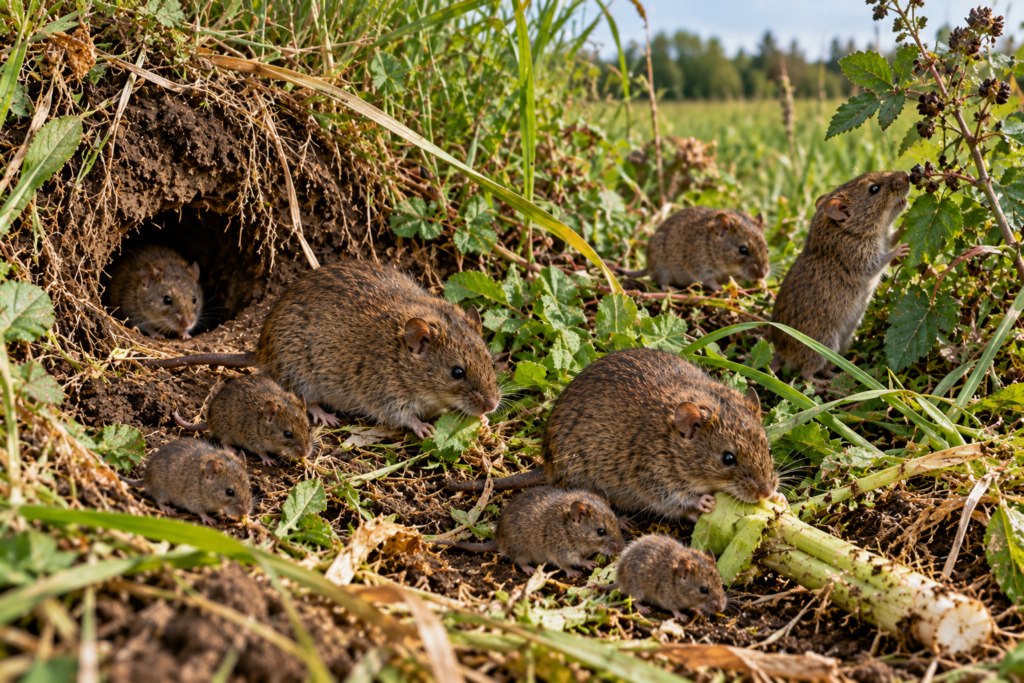
Signs of Vole Activity on Your Property
Voles are small rodents that live outdoors. Their damage is often most visible in spring, when melting snow exposes trails, tunnels and chewed grass across the lawn.
Surface runways in the grass
Burrow openings
Damaged or dead patches of grass
Feeding damage to plants
Activity near structures
How We Treat for Voles
Which method we use depends on your property, how much activity there is, safety factors and what the technician finds on site. We often combine methods for better results.
Professional Rodent Stations
Secured stations are installed along active runways and around landscaped areas, shrubs, garden beds, fence lines, sheds and decks. Treatment material stays inside a professional grade station. Your technician chooses placement based on the inspection.
Best for: Widespread activity across lawns and landscaped areas
Vole Trapping
Traps are set where runways or burrows are clearly visible and trapping suits the layout. This option works when you prefer a non-bait approach or have concerns about placement in certain areas. Results vary with weather, access and activity levels.
Best for: Concentrated activity or properties that prefer a non-bait option
Burrow or Gas Treatment
For active burrow systems, a burrow or gas treatment may be recommended. It targets tunnels where voles live and travel. This option does not suit every site. Trained technicians assess burrow locations, soil, nearby structures and safety factors first.
Best for: Clearly identified burrow systems where other methods are not enough
What Happens During a Vole Service
Contact us
Inspection
Treatment recommendation
Professional treatment
Monitoring and follow-up
Why Vole Damage Should Not Wait
Voles feed on grass, roots, bark and plant stems, so runways and dead patches spread across a lawn and into garden beds. Gnawed bark can harm shrubs and young trees. Because voles live and travel in burrow systems, the activity you can see is often part of a larger network. Early treatment limits the repair work later.
Reducing Future Vole Activity
Trim vegetation
Reduce thick ground cover
Remove debris
Clear cover near structures
Frequently asked questions
What does your vole treatment involve?
Depending on the site, we use professional rodent stations, trapping, burrow or gas treatment, or a mix of these. Treatments go into the runways and tunnels voles use, and we take care to limit exposure for pets and other wildlife. Larger problems may need a return visit.
What if my neighbours have voles too?
Voles from nearby properties can move back onto your land after treatment. Our service targets the voles currently on your property, and ongoing monitoring or follow-up may be needed for lasting control. In some cases, coordinating with neighbours gives better results.
How do you keep treatments away from pets and children?
Bait and gas products are applied directly inside burrows, not on the surface, and traps are placed in active tunnels. Your technician explains the safety steps and tells you when it is fine to use treated areas again.
What if I still see voles after treatment?
Fresh activity for a short time is normal as remaining voles move through their tunnel system. Treatments work over several days and results build as products take effect. If activity continues beyond that, more applications or trapping may be recommended.
Trails Across Your Lawn? Book a Vole Inspection
Call (587) 840-8133 or email info@technicapestsolutions.ca. Our Edmonton and Calgary teams serve surrounding Alberta communities.