Carpet Beetle Extermination in Alberta
Carpet beetle larvae eat wool, fur, feathers and other natural fibres in carpets, closets and furniture. We treat homes and businesses in Edmonton, Calgary and across Alberta with chemical or space heat treatment.
Signs of Carpet Beetles in Your Home or Business
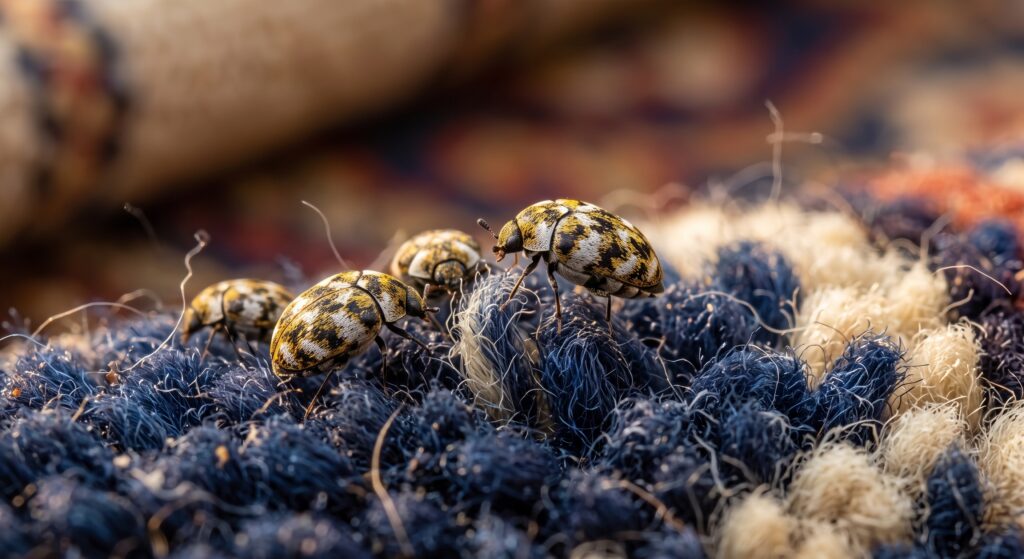
The adult beetle is rarely the real problem. The larvae do the damage, feeding quietly on natural fibres in carpets, closets, furniture and storage areas. Here is what to look for.
Small bristly larvae
Shed skins
Damage to fabrics and fibres
Adult beetles near windows
Lint and debris build-up
How We Treat Carpet Beetles
We use two methods. The right one depends on where we find larvae, how many rooms are involved, which materials they are eating and whether we can trace and remove the source. We recommend one after inspection.
Chemical Treatment
Professional products go where larvae hide, feed and travel: baseboards, carpet edges, cracks, closets, rugs and storage areas. It needs more prep than heat, like vacuuming and laundering fabrics. Repeat visits over 4 to 6 weeks may be needed.
Best for: Activity limited to a few areas where the source can be found and removed
Space Heat Treatment
Special heaters raise the room temperature to a level lethal to carpet beetles, larvae and eggs. Heat reaches carpets, furniture, baseboards, cracks and closets. Prep is lighter than for chemical treatment, but heat-sensitive items are moved or protected.
Best for: Widespread activity across several rooms, or when you want to reduce chemical use
How Carpet Beetle Service Works
Contact us
Inspection and quote
Preparation
Treatment
Follow-up and advice
Why Carpet Beetles Should Not Wait
Carpet beetle larvae feed slowly and out of sight. By the time you notice holes in a wool rug or a sweater, they may have been eating for months. They move from room to room through closets, vents and stored items, and each new generation adds to the damage. Early treatment limits what you lose.
How to Keep Carpet Beetles Out
Vacuum the edges
Store natural fibres well
Check what comes in
Remove dead insects
Frequently asked questions
Which is better for carpet beetles, chemical or heat treatment?
It depends on your situation. Chemical treatment suits activity in a few defined areas. Heat is often recommended when activity is spread through a room or property, when beetles may be hidden in furniture or belongings, or when you want less chemical use. We recommend one after inspection.
How much preparation is needed?
Chemical treatment needs more. Expect a deep vacuum, clearing items off baseboards, washing or bagging affected fabrics, cutting down clutter and dealing with anything already infested. Heat needs less, but heat-sensitive items must be removed or protected and clutter cleared so heat can circulate.
How many treatments will it take?
Heat treatment kills beetles, larvae and eggs when the right temperature is held long enough. Chemical treatment may need more than one application. Depending on how severe the infestation is and the beetle life cycle, we may recommend treatments over 4 to 6 weeks.
Why do I keep finding carpet beetles after cleaning?
Cleaning helps, but larvae hide in places a vacuum misses: under heavy furniture, inside wall voids, in stored boxes and along carpet edges. If the source is not found and removed, new larvae keep hatching. Our inspection is aimed at finding that source so the treatment holds.
Stop the Damage Before It Spreads
Finding larvae, shed skins or holes in fabric? Call (587) 840-8133 or email info@technicapestsolutions.ca.